
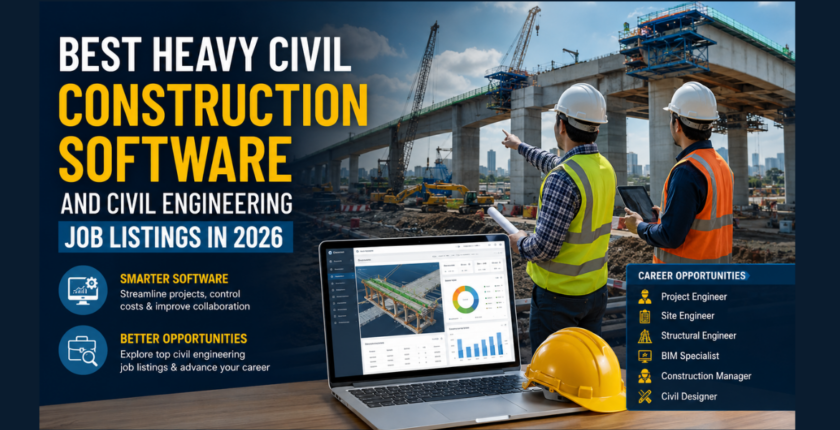
Best Heavy Civil Construction Software and Civil Engineering Job Listings in 2026
The civil engineering industry is evolving rapidly in 2026 as infrastructure projects become larger, more complex, and increasingly technology-driven. Contractors and engineering firms are adopting digital tools to improve project planning, cost control, scheduling, and collaboration across teams. At the same time, demand for skilled professionals continues to grow, leading to a significant increase in civil engineering job listings across transportation, utilities, energy, and construction sectors.
For companies managing highways, bridges, rail systems, and other large-scale infrastructure projects, selecting the best heavy civil construction software has become a strategic advantage. Modern software platforms help organizations reduce delays, improve resource management, and maintain better visibility across project lifecycles.
In this article, we explore the latest trends in heavy civil construction technology, the most valuable software capabilities, and the changing landscape of civil engineering hiring in 2026.
Why Heavy Civil Construction Software Matters in 2026
Heavy civil projects involve thousands of moving parts, including equipment, labor, materials, subcontractors, and compliance requirements. Traditional spreadsheets and disconnected systems often create communication gaps and increase the risk of cost overruns.
Modern construction software addresses these challenges by providing:
- Centralized project management across teams and locations.
- Real-time schedule tracking and progress reporting.
- Budget and cost management for improved financial control.
- Document management for drawings, RFIs, and change orders.
- Equipment and resource tracking to maximize productivity.
- Field-to-office collaboration through mobile access.
As infrastructure investment continues to rise, contractors are prioritizing digital platforms that improve efficiency and support data-driven decision-making.
Key Features of the Best Heavy Civil Construction Software
When evaluating construction software for infrastructure projects, organizations should focus on capabilities that support both field operations and executive oversight.
Project Scheduling
Advanced scheduling tools help teams manage dependencies, milestones, and critical paths across large infrastructure programs.
Cost & Budget Control
Integrated financial management enables accurate forecasting, change-order tracking, and budget monitoring.
Field Collaboration
Mobile applications allow engineers, superintendents, and inspectors to update progress directly from the job site.
Safety & Compliance
Digital safety workflows help organizations maintain compliance with regulatory and project-specific requirements.
Leading Software Categories for Heavy Civil Projects
Rather than relying on a single tool, many contractors build a connected technology stack. The most commonly used categories include:
| Software Category | Primary Use |
| Project Management Platforms | Scheduling, coordination, and reporting |
| BIM & Digital Engineering Tools | 3D modeling and design collaboration |
| Estimating Software | Cost estimation and bid preparation |
| Field Management Apps | Daily reports, inspections, and productivity tracking |
| Equipment Management Systems | Fleet utilization and maintenance tracking |
| Document Control Platforms | Drawings, RFIs, and change-order management |
The best solution depends on company size, project complexity, and integration requirements.
How Technology Is Changing Civil Engineering Job Listings
The growth of digital construction has changed the skills employers look for when posting engineering roles. Today’s civil engineering job listings increasingly include technology-focused requirements alongside traditional engineering expertise.
Commonly requested skills include:
- BIM and digital modeling experience
- Construction management software proficiency
- Data analysis and reporting skills
- Project scheduling knowledge
- Infrastructure design expertise
- Communication and stakeholder coordination
- Understanding of sustainable construction practices
Engineers who can combine technical knowledge with digital project management capabilities are becoming especially valuable.
Most In-Demand Civil Engineering Roles in 2026
Infrastructure expansion is creating opportunities across multiple disciplines.
| Role | Key Focus Area |
| Project Engineer | Coordination and execution |
| Structural Engineer | Design and analysis |
| Transportation Engineer | Roads, rail, and transit systems |
| BIM Specialist | Digital modeling and collaboration |
| Construction Manager | Site leadership and delivery |
| Estimator | Cost planning and bidding |
| Environmental Engineer | Sustainability and compliance |
Many employers now prioritize candidates who can work effectively with modern construction software and digital workflows.
Benefits of Using Specialized Heavy Civil Software
Organizations that invest in dedicated heavy civil construction platforms often experience measurable operational improvements.
10–20%
Fewer delays
through better scheduling
8–15%
Lower rework
through improved coordination
5–12%
Better cost control
through real-time visibility
25%+
Faster reporting
through automated data capture
These advantages can be particularly significant on large transportation and infrastructure projects where margins depend on accurate planning and execution.
Challenges Facing the Civil Engineering Workforce
Despite strong demand, the industry continues to face several workforce challenges:
Skilled Talent Shortage
Many regions report difficulty finding experienced engineers, project managers, and field supervisors. The gap is especially noticeable in transportation and infrastructure projects.
Rapid Technology Adoption
As software platforms evolve, professionals must continually update their technical skills. Engineers who remain current with digital tools are better positioned for career advancement.
Complex Project Delivery
Modern infrastructure projects often involve tight schedules, multiple stakeholders, and strict compliance requirements, increasing the need for highly capable engineering teams.
How Engineers Can Stay Competitive
Professionals looking to stand out in civil engineering job searches should focus on both technical and digital capabilities.
Recommended actions
- Learn BIM and digital construction workflows.
- Gain experience with construction management software.
- Develop project scheduling and cost-control skills.
- Build expertise in infrastructure and transportation projects.
- Pursue relevant certifications and continuing education.
- Strengthen communication and leadership abilities.
Employers increasingly value engineers who can bridge the gap between design, construction, and digital project management.
Conclusion
In 2026, the combination of infrastructure investment and digital transformation is reshaping both construction operations and engineering careers. Selecting the best civil construction software can help contractors improve efficiency, control costs, and deliver complex projects more successfully. At the same time, the growing number of civil engineering job listings reflects strong demand for professionals who possess both engineering expertise and modern digital skills.
Whether you are a contractor seeking better project technology or an engineer exploring new career opportunities, understanding these trends will be essential for success in the evolving civil engineering market.
FAQs
What is heavy civil construction software?
Heavy civil construction software is a digital platform used to manage infrastructure projects such as highways, bridges, rail systems, utilities, and large public works. It typically includes scheduling, cost control, document management, and field collaboration features.
What features should I look for in the best heavy civil construction software?
Look for project scheduling, budget tracking, mobile field reporting, document control, equipment management, and integration with BIM or other engineering tools.
Are civil engineering job listings increasing in 2026?
Yes. Demand is growing across infrastructure, transportation, energy, and construction sectors as organizations continue to invest in large-scale development projects.
Which skills are most valuable for civil engineers today?
BIM knowledge, construction software proficiency, project management, data analysis, and communication skills are among the most sought-after capabilities.
Can construction software improve project profitability?
Yes. By improving scheduling, reducing rework, increasing visibility into costs, and enhancing team coordination, construction software can help organizations deliver projects more efficiently and protect margins.