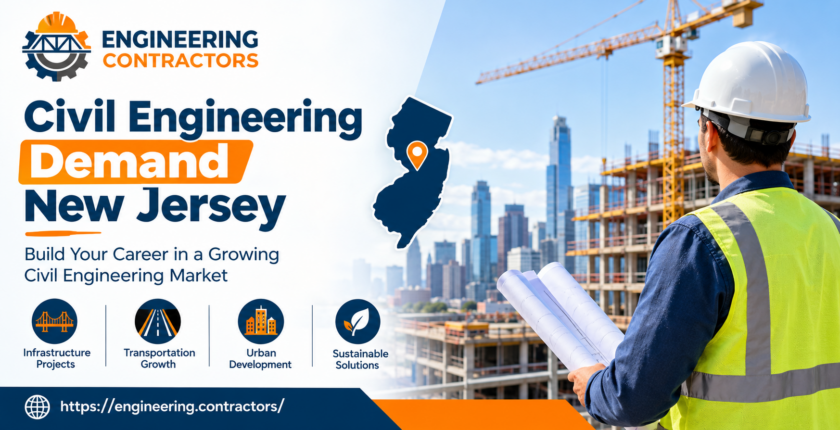
Civil Engineering Demand New Jersey and the Best Jobs for Engineers
New Jersey offers civil engineers opportunities to work on transportation systems, commercial developments, water infrastructure, and large construction projects. As communities modernize roads, bridges, public facilities, and utility networks, skilled professionals remain important to planning and delivering reliable infrastructure. Understanding civil engineering demand New Jersey can help students, experienced engineers, and construction professionals choose the right career path and identify promising areas of specialization.
Understanding Civil Engineering Demand New Jersey
Civil engineering is an essential part of New Jersey’s construction and infrastructure industry. The state has a combination of urban development, busy transportation corridors, industrial facilities, residential communities, and aging infrastructure that requires ongoing maintenance and improvement.
Employment projections provide a useful picture of the profession’s future. State-level projections indicate that New Jersey had approximately 7,010 civil engineers employed in 2024, with employment expected to reach 7,280 by 2034. That represents projected growth of around 4%, with approximately 440 job openings annually over the period. These estimates include openings associated with workforce replacement as well as employment growth.
The figures suggest steady opportunities rather than guaranteed employment for every applicant. Actual hiring depends on project funding, employer requirements, experience, and the location of construction activity.
For professionals researching civil engineering demand New Jersey, the main takeaway is that technical knowledge and practical project experience can make a meaningful difference when applying for suitable positions.
Why New Jersey Needs Skilled Civil Engineers
Several factors contribute to the continued need for civil engineering professionals across the state.
1. Transportation and Highway Improvements
New Jersey connects major metropolitan areas and handles substantial daily traffic. Roads, highways, bridges, intersections, and public transportation facilities require regular inspection, rehabilitation, and improvement.
Transportation projects create opportunities for highway engineers, structural engineers, transportation planners, construction inspectors, and project engineers. Professionals who understand roadway design, traffic management, drainage, and construction safety can be valuable to infrastructure teams.
2. Aging Infrastructure and Bridge Rehabilitation
Older bridges, drainage systems, and public structures require inspection and maintenance to remain safe and functional. Engineers help assess existing conditions, identify structural concerns, recommend repairs, and develop plans for rehabilitation.
These projects often require knowledge of structural analysis, construction materials, engineering standards, and project coordination. Engineers who can evaluate existing infrastructure and recommend practical solutions may find opportunities with consulting firms, contractors, and public-sector organizations.
3. Residential and Commercial Development
Population centers across New Jersey need housing, commercial buildings, parking facilities, access roads, and supporting infrastructure. Every development must consider site conditions, stormwater management, utilities, grading, and applicable building requirements.
Civil engineers help ensure that development plans are practical, safe, and compatible with local requirements. Site engineering and land development can therefore be useful career paths for professionals interested in combining design work with real construction projects.
4. Water Management and Environmental Protection
Stormwater control, wastewater treatment, flood mitigation, and water distribution are important infrastructure concerns. Engineers in these fields help protect communities, improve system performance, and support environmental compliance.
Professionals with experience in drainage design, hydraulic modeling, water resources, and environmental regulations can explore specialized roles in public infrastructure and private consulting.
Best Civil Engineering Jobs in New Jersey
The best role depends on your qualifications, interests, and long-term goals. Some engineers prefer design and analysis, while others enjoy fieldwork, scheduling, estimating, or managing construction teams.
1. Civil Project Engineer
Civil project engineers coordinate engineering tasks from planning through construction. Their responsibilities may include reviewing drawings, preparing technical documents, tracking project progress, coordinating with contractors, and helping resolve site issues.
This position can suit early-career engineers who want broad experience across design, documentation, and project delivery. Strong communication, organization, and technical problem-solving skills are important.
2. Structural Engineer
Structural engineers analyze and design structures such as bridges, buildings, retaining walls, and other infrastructure components. They evaluate loads, materials, safety requirements, and structural performance.
Candidates with knowledge of structural analysis, design codes, and technical modeling may be well suited to this specialization. Experience with rehabilitation projects can also be useful when working on existing infrastructure.
3. Transportation Engineer
Transportation engineers work on roads, highways, intersections, traffic systems, and mobility improvements. Depending on the position, duties may include traffic studies, roadway geometry, pavement design, safety assessments, and transportation planning.
This career can appeal to professionals interested in improving transportation efficiency and supporting infrastructure upgrades throughout New Jersey.
4. Construction Project Manager
Construction project managers oversee the practical delivery of construction projects. They coordinate schedules, budgets, labor, materials, subcontractors, quality control, and safety requirements.
Civil engineers who develop strong leadership and commercial skills may progress into project management. Familiarity with scheduling tools, cost control, contract documentation, and risk management can strengthen their qualifications.
5. Site and Land Development Engineer
Site engineers help prepare land for residential, commercial, and industrial development. Typical tasks include grading plans, site layouts, utility coordination, erosion control, and stormwater management.
This role suits engineers who enjoy combining design work with field coordination. Knowledge of local approval processes and land development requirements can be particularly helpful.
6. Water Resources Engineer
Water resources engineers focus on drainage, flood management, stormwater systems, waterways, and water infrastructure. They may conduct hydrologic studies, evaluate drainage capacity, or develop designs that reduce flooding risks.
Specialized knowledge of hydraulic analysis, environmental requirements, and water management can help candidates pursue work on municipal and private-sector projects.
7. Civil Estimator and Project Scheduler
Estimators calculate expected construction costs by reviewing drawings, quantities, labor requirements, equipment, and materials. Project schedulers develop timelines, monitor progress, and identify potential delays.
These positions can suit engineers who enjoy planning, data analysis, and construction coordination more than detailed design. Experience with quantity takeoffs, cost forecasting, scheduling software, and progress reporting can help candidates stand out.
Where to Look for Civil Engineering Opportunities in New Jersey
Different regions offer different types of engineering work. Understanding local industries can help applicants focus their search.
Northern New Jersey
Northern New Jersey offers access to major urban and suburban development, transportation networks, commercial properties, and utility infrastructure. Engineers may explore opportunities in transportation, structural design, site development, and project coordination.
Central New Jersey
Central New Jersey combines residential development, commercial construction, institutional facilities, and transportation infrastructure. Site engineers, project engineers, water resources specialists, and construction managers may find relevant opportunities in these areas.
Southern New Jersey
Southern New Jersey includes coastal communities, municipal infrastructure, environmental projects, road improvements, and water management needs. Engineers interested in drainage, environmental protection, transportation, and public works can consider roles connected to these activities.
These regional descriptions are general career-planning guidance, not a ranking of current vacancies. Applicants should compare actual job requirements, commuting distances, project types, and employer expectations before deciding where to focus.
Skills That Can Improve Your Job Prospects
A civil engineering degree provides a foundation, but employers also look for evidence that candidates can contribute to real projects.
Technical skills: Strengthen your understanding of engineering drawings, construction materials, structural principles, grading, drainage, and applicable design standards.
Software knowledge: Depending on your specialization, experience with computer-aided design, building information modeling, quantity takeoff, project scheduling, or engineering analysis tools can be valuable.
Field experience: Internships, site visits, inspection work, and construction project experience help you understand how designs translate into completed infrastructure.
Communication: Engineers regularly coordinate with architects, contractors, clients, inspectors, and project teams. Clear technical writing and effective communication help prevent misunderstandings.
Professional development: Learn about the licensing requirements that apply to your intended role. A Professional Engineer license may be required or preferred for certain responsibilities, particularly those involving independent engineering practice and approval of technical work.
How to Find the Right Civil Engineering Job
Start by choosing the type of work you want to pursue. A graduate may focus on entry-level civil engineering or field engineer positions, while an experienced professional might target project management, structural design, estimating, or specialized infrastructure roles.
Next, prepare a focused resume that highlights relevant projects, technical skills, software knowledge, certifications, and measurable contributions. Tailor the document to each position instead of sending the same generic application everywhere.
Search using specific job titles and locations. For example, try civil project engineer, transportation engineer, site civil engineer, structural engineer, construction project manager, or civil estimator alongside New Jersey and your preferred city.
Review the responsibilities carefully. Some positions emphasize office-based design, while others involve frequent site visits, travel, or coordination with construction crews. Understanding these expectations can help you find a role that matches your experience and career goals.
For additional career context, review the official U.S. occupational outlook information for civil engineers. Use published outlook figures as general guidance and check current employer requirements before making career decisions.
Conclusion
New Jersey’s infrastructure, transportation, development, and water management needs provide several possible career paths for civil engineers. From structural design and site development to estimating and project management, the strongest opportunity depends on matching your skills with the right role. Build practical experience, improve your technical abilities, and target relevant openings. Explore Engineering Contractors to discover engineering and construction career opportunities, including this