
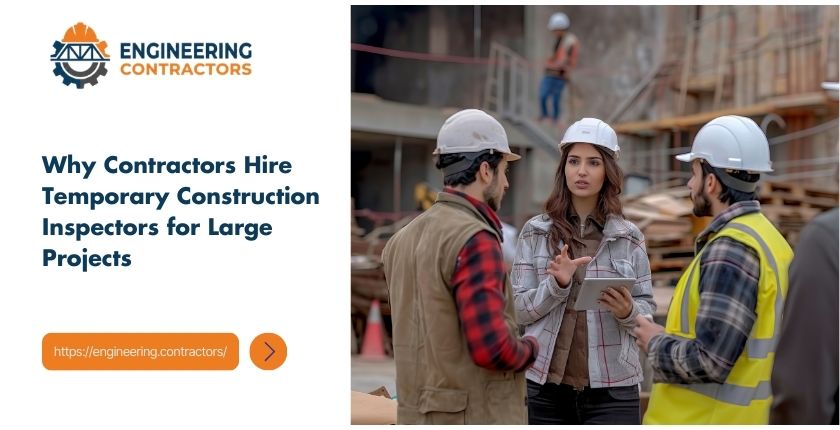
Why Contractors Hire Temporary Construction Inspectors for Large Projects
Big construction and infrastructure works need quality control, safety checks and regulations. Whether it is highways and bridges or commercial buildings and utilities, the contractors have to make sure that each phase of construction must correspond to the engineering requirements and the government. Hiring Temporary Construction Inspectors to ensure projects are done according to requirement codes and specification is one of the best methods to attain this.
Temporary inspectors are important to contemporary infrastructural development particularly when the project is characterized by strict deadlines, complicated engineering standards, as well as numerous subcontractors. Temporary inspection professionals aid in quality maintenance, risks mitigation, and successful completion of projects by contractors dealing with large projects in the United States.
Understanding the Role of Construction Inspectors
Construction inspectors are mandated with auditing on building operations to make sure that work is in accordance with accepted plans, engineering and safety requirements. Based on the U.S Bureau of Labor statistics, the inspectors determine building plans, observe construction works, and ensure materials and building installations are in accordance with the local building codes and the contract requirements.
Inspectors typically perform tasks such as:
- Reviewing engineering drawings and project specifications
- Monitoring construction sites for compliance with safety and building codes
- Verifying that materials and workmanship meet required standards
- Maintaining inspection reports and documentation
These duties ensure that inspectors are paramount in ensuring that the quality of the projects is maintained, and that there is no construction mistake that may involve high costs.
Increasing Demand for Temporary Construction Inspectors
Major construction works may necessitate an increase in the number of inspection personnel during peak periods in construction. These short-term increases in workloads are often contracted by Temporary Construction Inspectors.
Temporary inspectors are commonly used when:
- A project requires specialized inspection expertise
- Construction schedules accelerate or expand
- Multiple project phases occur simultaneously
- Contractors need additional compliance monitoring
Due to the fact that massive infrastructure projects might take several years and thousands of checks, outsourcing the services of temporary professionals assists the companies to sustain the efficiency level without hiring staff permanently.
The temporary positions also leave numerous opportunities in the construction engineering work, especially to engineers and technical specialists who work in the field-based infrastructure works.
Ensuring Compliance With Building Codes and Regulations
Building codes and regulatory standards are considered to be one of the most significant motives in contractors employing temporary inspectors in order to make sure that all requirements are met.
Building projects should be performed according to local and national requirements related to the structural integrity, the electrical systems, plumbing, and environmental safety. Work is routinely inspected to ensure that it is up to these standards.
The U.S. Bureau of Labor Statistics reveals that project inspectors visit the project on various occasions in its life, be it during its early construction or completion to ensure that the project was constructed according to the approved plans and that the construction was safe.
The reduction of code violations leading to delays in construction or the heavy fines by hiring more inspectors in a complicated construction project helps the contractor to save time and consequently, money.
Improving Construction Quality and Reducing Rework
One of the problem areas of large construction projects is quality control. Even minor mistakes during construction can result in costs or time wastage.
Temporary inspectors assist in early detection of the problems through looking at the workmanship, materials used and the process of installation. Their minute observations enable the contractors to rectify their problems before they become a significant flaw.
Documentation and photographic records of site conditions are also prepared by the inspectors and they serve to keep track of progress and to check that engineering specifications are being met by the contractors.
This proactive strategy saves a lot of time and money to the construction companies as this greatly decreases the chances of re-work.
Supporting Large and Complex Infrastructure Projects
Large-scale construction projects like roads, railway lines, and big business establishments usually consist of a number of contractors and professional teams operating in parallel.
Extra supervision of coordination between these teams is offered by temporary inspectors. Their duties can be:
- Monitoring excavation and grading work
- Inspecting structural installations such as concrete or steel
- Verifying traffic control and environmental protection measures
- Reviewing contractor reports and daily progress updates
These projects are characterized by a large number of technical activities, and due to the presence of inspectors, the standards of various contractors and subcontractors are kept in line.
Massive projects also opportunities for large numbers of jobs in construction engineering such as inspection jobs, project management jobs, and site supervisor jobs.
Flexibility and Cost Efficiency for Contractors
The contractors have the flexibility of hiring temporary inspectors. Companies do not need to have such a big standing inspection force but they can hire specialists on demand.
Temporary staffing helps contractors:
- Adjust workforce size based on project workload
- Reduce long-term labor costs
- Access specialized inspection expertise
- Maintain productivity during peak construction phases
The flexibility of this method enables firms to deal with big infrastructure projects with enhanced efficiency without compromising on the quality of the work.
Also, a number of professionals seeking employment in the construction sector as contractors tend to begin as temporary or project-specific inspection positions and then advance to a permanent engineering or management post.
Strengthening Safety and Risk Management
The construction sites pose serious safety risks; there are heavy machinery, structure risks and environmental challenges. Inspectors are also important in the detection of unsafe practices and compliance with safety regulations.
Independent inspections help contractors maintain safer job sites by:
- Identifying hazards early
- Verifying proper use of protective equipment
- Ensuring adherence to safety procedures
According to experts in the industry, the independent inspectors are also useful in safeguarding the reputation of the contractors by ensuring that the projects are properly developed (professional and safe).
A robust inspection will not only save the workers, but also eliminate legal and financial liability of construction firms.
The Role of Construction Job Posting Platforms
With the need to hire more people to inspect their buildings, contractors are overly using the internet to hire the right candidates. Advertising the positions on industry specific sites enables firms to recruit engineers and inspectors who have experience in the industry.
An organized advertisement of a construction work would usually contain the project description, inspection duties, and certifications, as well as the location of the site. This assists the contractors to recruit individuals with the appropriate technical skills and experience.
Industry job boards and engineering career platforms are among the most popular search engines by many professionals who are interested in job opportunities in the construction engineering field.
Conclusion
The temporary inspection professionals are also critical in the success of the large construction projects. Temporary Construction Inspectors assist contractors in providing complex infrastructure projects in an efficient and safe manner by ensuring that they comply with the building codes, they uphold the quality of their work and they assist in the safety measures.
To contractors and engineers seeking to network with the opportunities within the infrastructure and construction sector, there are specialized job sites like engineering.contractors which offer a niche environment in which the industry can be recruited. Such platforms provide employers with the opportunity to designate specific construction job posting ads and assist the professionals with exploring new prospects and locating contractor jobs in the engineering, inspection, and construction management.
Since the development of infrastructure is still expanding throughout the United States, the need of qualified inspection experts will continue to be a significant component of the construction industry.
FAQs
1. What does a temporary construction inspector do?
A temporary construction inspector monitors construction activities to ensure compliance with engineering plans, safety regulations, and building codes. They conduct site inspections, review materials, and document project progress.
2. Why do contractors hire temporary construction inspectors?
Contractors hire temporary inspectors to handle increased workloads during large projects, ensure compliance with regulations, and maintain quality control without expanding permanent staff.
3. What qualifications are required for construction inspectors in the U.S.?
Most construction inspectors need technical training in construction or engineering and experience reading building plans and specifications. Some roles also require certifications or professional engineering licenses depending on the project.
4. Are temporary construction inspector jobs good career opportunities?
Yes. Temporary inspection roles provide valuable field experience, exposure to major infrastructure projects, and opportunities to transition into full-time engineering or project management roles.
5. Where can professionals find temporary construction inspector jobs?
Professionals can search engineering job boards, infrastructure recruitment platforms, and company career pages that specialize in construction and engineering opportunities.